
Is it time to break up with your brand name?
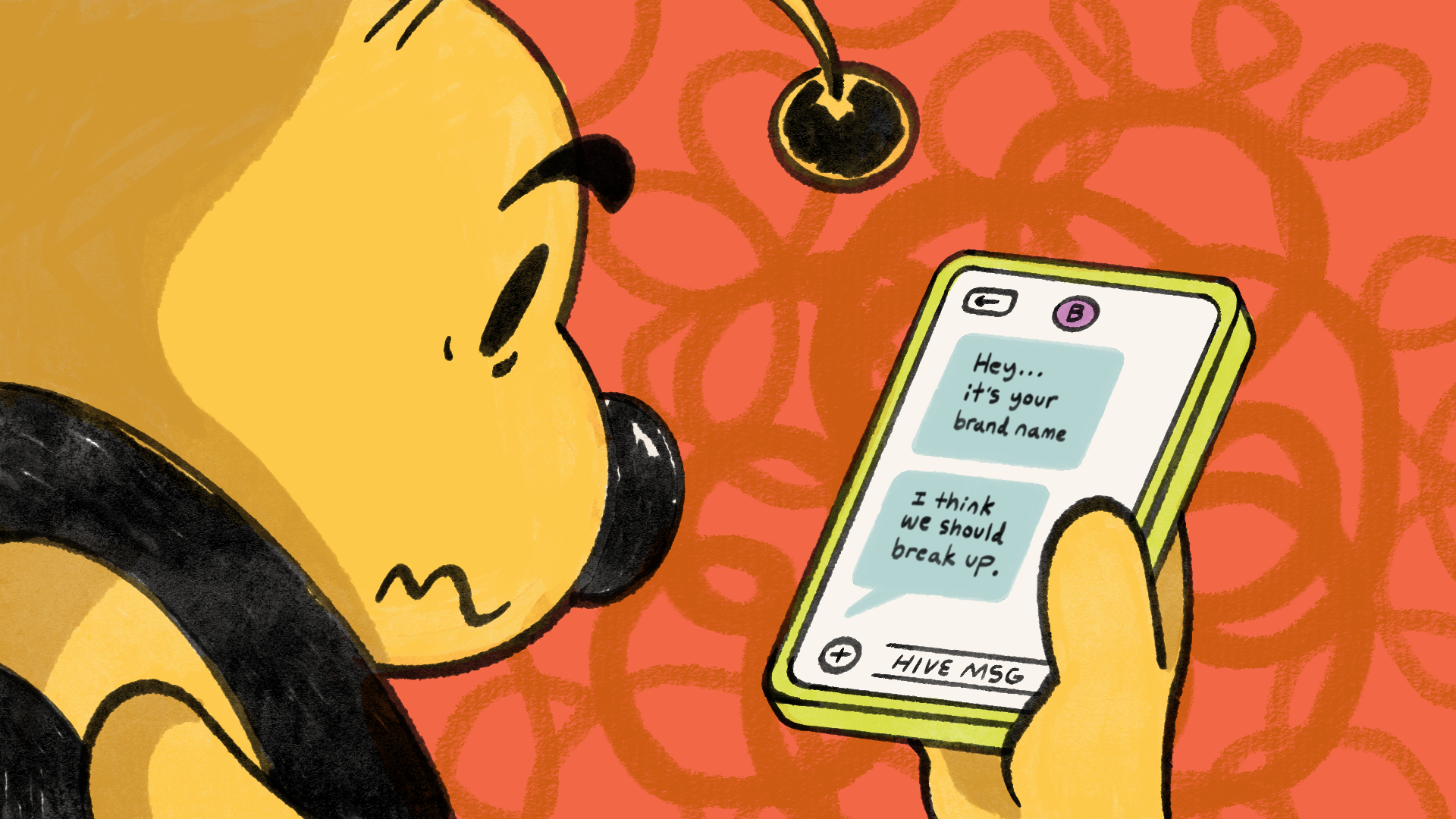
Any other parents find naming a baby extremely daunting?
I’m preparing to name baby girl number two right now, and it’s not as easy as I remembered, folks.
I want her name to be meaningful, flow well with my oldest daughter’s name, and be easy to pronounce. The initials can’t accidentally spell something she gets teased for. My husband and I need to AGREE. And wow there are a lot of names that remind me of mean girls from middle school!! Yikes.
You might be wondering why I’m talking about naming my baby here. Well, the funny thing is, naming a kid has a lot in common with naming a business. I would know because while I’ve been debating names for my tiny human, my team and I were deep in the process of naming a brand, too.
Somewhere between the baby name books and trademark searches, I decided that whether you’re naming a child or a company, you’re probably asking the same question. Does this name have the potential to become everything I hope it/he/she can be?
That’s a lotta pressure, and probably why naming can be so hard.
Like branding, a name is one of the first impressions someone has of your business. It shapes expectations before they ever experience your work. And while I was realizing this, it got me thinking about how some of the world’s biggest brands have been in the same position. Smack dab in the middle of the name game…
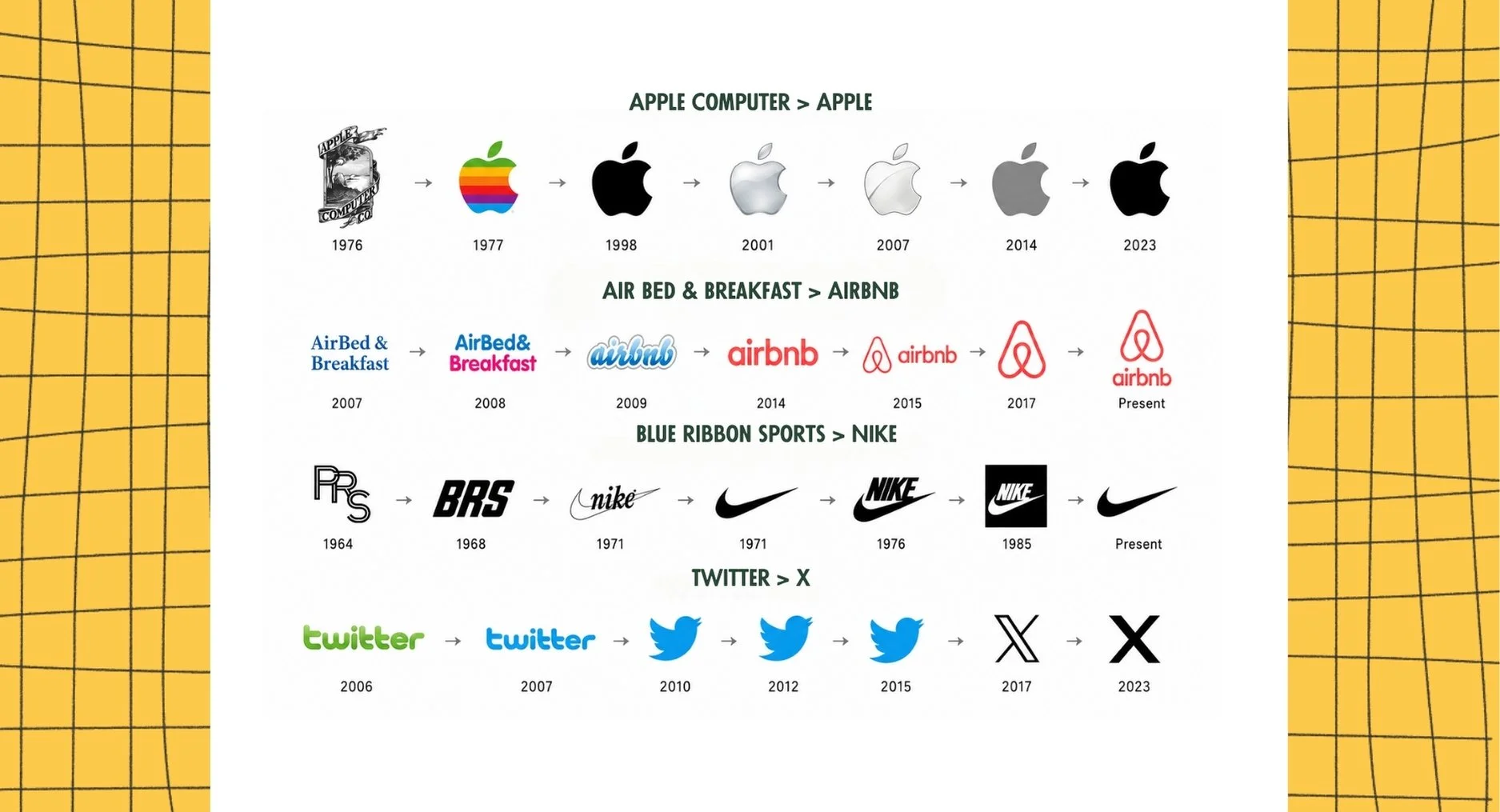
Like when Apple Computer became Apple:
Back in 2007, Apple dropped “Computer” from its name. Not because the original name was wrong, but because the company had expanded beyond computers. As Apple moved into music, phones, watches, services, and more, the word “Computer” became limiting.
Naming Tip:Before you commit, imagine introducing your business five years from now. Will your name still fit if your services, audience, or goals grow?
Or when AirBed and Breakfast shortened to Airbnb:
When they launched, the name described exactly what the company offered: a way for travelers to stay in someone’s home, often on an air mattress, and share a meal. But as the business expanded, Airbnb became about much more than a place to sleep. It became about unique stays, travel experiences, and helping people feel at home anywhere in the world. By shortening the name, Airbnb created room for a bigger vision while still keeping a connection to where it started.
Naming Tip: Ask yourself if you’re naming your business for what it is today or what you hope it becomes.
Pro tip: Your name doesn’t have to explain everything.
Some of the most recognizable brands in the world started with names that had very little to do with their actual products. Their names became powerful because the brands built meaning around them.
Heard of Blue Ribbon Sports?
How about Nike? Blue Ribbon Sports made sense for the business at the time, but it didn’t leave much room for the iconic brand it would become. When the company became Nike, it chose a name inspired by the Greek goddess of victory. It didn’t tell you they made shoes. It created a feeling of movement, achievement, and aspiration.
Naming Tip: Your name doesn’t have to do all the heavy lifting. Your logo, messaging, visuals, and customer experience help teach people what your name means.
Even “Google” doesn’t explain what the company does! Instead, it gives people room to create their own understanding of the brand.
Wait a sec… If Nike doesn’t sound like a shoe company and Google doesn’t sound like a search engine,is the meaning behind a name still important?
Hell to the yes.
Meaning doesn’t always have to be obvious at first. Some of the strongest names create space for meaning to develop over time.
That being said, you don’t always get to decide what a name represents. Every word comes with its own history, associations, and emotions. Sometimes those connections are created by your brand. Sometimes they existed before you showed up.
Which means, a good name can actually become the wrong name.
Remember the Dixie Chicks? New name: The Chicks.
The country trio changed their name to The Chicks because of what the word “Dixie” represented. While the term had long been associated with Southern culture, it also carried connections to the Confederacy and a racist history surrounding that era. The band decided that association no longer aligned with the identity they wanted to carry forward.
Naming Tip: Before falling in love with a name, research it from every angle. Look beyond the dictionary definition and consider history, culture, slang, search results, and the associations people might already have.
Changing a name isn’t just about updating your website or logo, though. It’s connected to memories, experiences, and expectations. When you change it, you’re asking people to come with you, which means the next step is helping them understand why.
A new name needs a strong story behind it.
Twitter, now X, became part of everyday language. People didn’t just use the platform, they tweeted and retweeted. The name became a verb, a community, and an entire vocabulary built around the brand. When they renamed it to X, they were asking millions of people to replace years of habits and language tied to the original brand. Something that had already become part of everyday culture. That’s a heavy lift. I know I can’t be the only one that still calls it Twitter.
Naming Tip: Before changing a name, consider the relationship people already have with it. The more history attached to your name, the more important the reason behind the change becomes.
Here’s a logo evolution for the visual learners like us!
So… how do you know you’ve found “the one?”
Looking at all these examples, one thing is pretty clear..
A successful name needs to fit, have a purpose, and have quality branding to support it.
That was exactly the process we stepped into with ForceFluent. ForceFluent had built a strong reputation as a Salesforce consulting partner. They had expertise, trust, and a proven track record. But as the company looked toward the future, they needed a name that could represent more than a single service offering. But there was also a practical reason for the change: using “Force” in their business name no longer aligned with their goals of becoming a Salesforce partner, which required them to cease use of the word Force in the brand name.
So, a name change was necessary. But instead of simply swapping out a word, they saw an opportunity to step back and ask a bigger question: What should this brand name say about where our company is headed next?
As the company looked toward the future, they needed a name that could represent more than a single service offering. They needed something that felt....
Confident, but not overly corporate
Approachable, but still credible
Flexible enough to grow
Distinct in a crowded tech space
The Naming Process: Finding Tropo
It was a lot more than brainstorming a list of words and picking a favorite. Although, we did a ton of brainstorming and research to get there.
We explored names through questions like:
Could this name hold meaning?
Does it create the right feeling?
Will it sound natural when clients say it out loud? Aka does it roll off the tongue.
Can it support a larger brand story?
Can it evolve with the business?
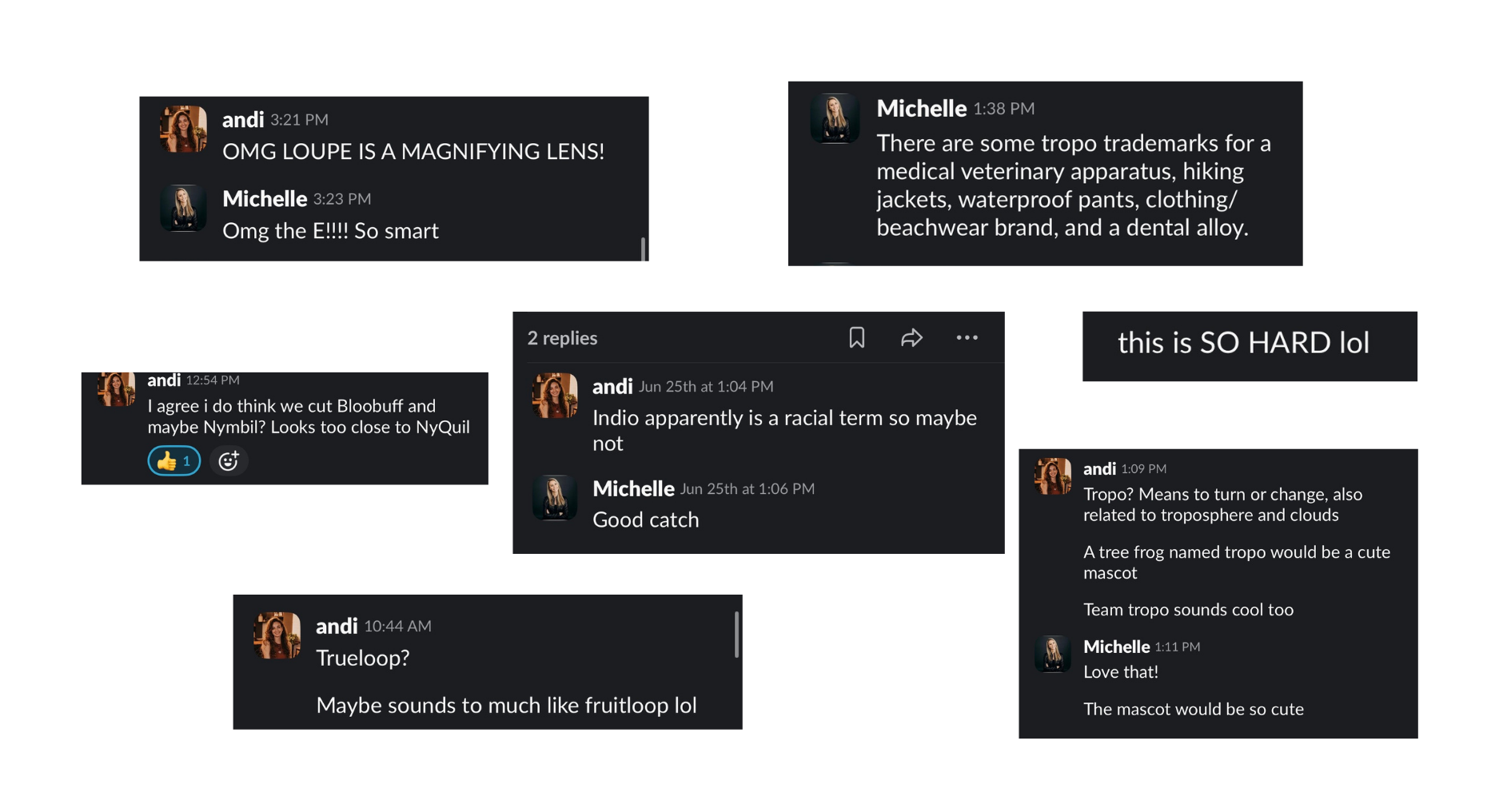
And of course, there were plenty of exciting ideas and “this might be the one” moments, only to discover the domain was taken, the trademark didn’t work, another company already claimed it, or the word had an unexpected association we hadn’t considered.
All that to say, a name may look simple, but getting there takes research, strategy, creativity, and for Honey Creative, a whole lot of Slack conversations.
Receipts:
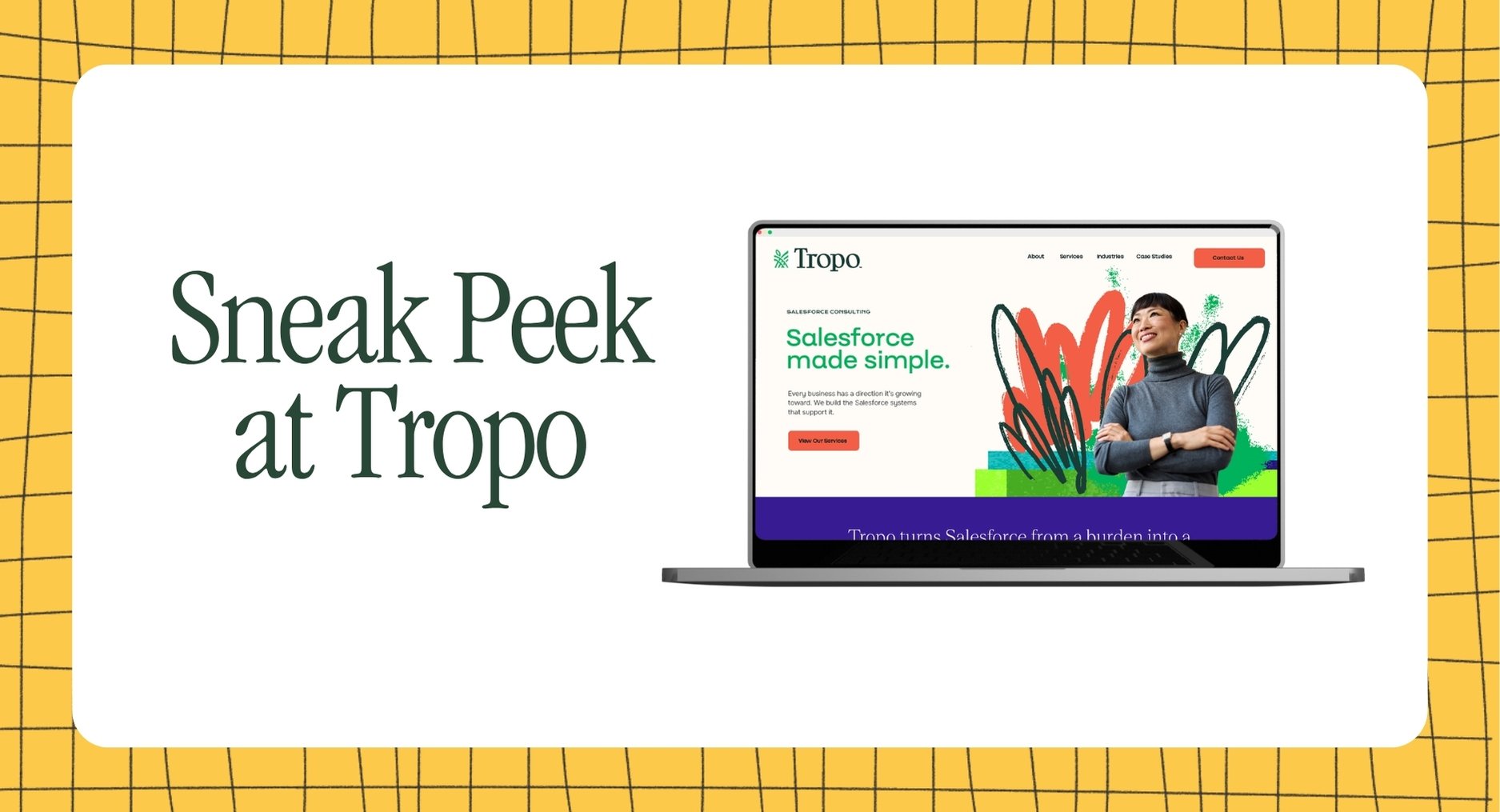
After exploring countless directions, we landed on Tropo. Inspired by tropism, the natural movement of plants in response to their environment, Tropo represents growth, adaptation, and moving toward what helps you thrive. Plants respond to light, gravity, and their surroundings. They adjust and move toward the conditions that allow them to flourish.
Here’s a sneaky peek:
A great name doesn’t build a brand overnight, but the right name helps a brand grow in the right direction.
We can’t wait to share the full Tropo transformation soon. Stay tuned for the September launch!
Thinking about renaming or rebranding?
We’d love to help.